Energy storage is no longer a supporting technology—it has quickly become the backbone of the clean energy transition. As more homes install rooftop solar and more drivers switch to electric vehicles, the question isn’t how much power we can generate from renewable sources, but how well we can store and deliver that power exactly when it’s needed.
Why the world suddenly cares about storage
Solar power is cheap and clean, but it doesn’t always match the hours when people use energy. Rooftop solar peaks at midday, while home demand peaks in the evening. Without energy storage, that mismatch forces the grid to fall back on fossil fuels.
Energy storage flips the equation: charge when abundant, discharge when needed. The same logic empowers electric vehicles—every car becomes a rolling energy asset, not just a power consumer.
The rise of lithium iron phosphate (LFP)
For decades, lithium-ion batteries relied on nickel and cobalt. But the industry is rapidly shifting to LFP (lithium iron phosphate), especially in China and Europe. Why?
- Longer cycle life (up to 4,000–6,000 cycles)
- Better thermal safety (lower fire risk)
- Cheaper due to cobalt-free chemistry
- Perfect for stationary storage and mass-market EVs
That’s why companies like BYD, CATL, and Tesla are now using LFP in both homes and cars. Lower cost → more adoption → faster transition.
But the next wave is sodium-ion
There’s a new player rising fast: sodium-ion. It uses everyday salt, which means:
- No lithium supply pressure
- Works better in freezing weather
- Even lower cost potential
CATL began mass production in 2023, and BYD follows in 2025. Sodium won’t replace lithium everywhere, but it could become the default for large grid installations where price beats energy density.
How big batteries stabilize the grid
Large-scale battery storage solves several real-world grid problems:
- Shifting excess solar power to evening use
- Replacing gas peaker plants
- Improving reliability during peak load
- Fast frequency regulation (milliseconds vs minutes)
The result: cleaner, cheaper, more stable electricity systems.
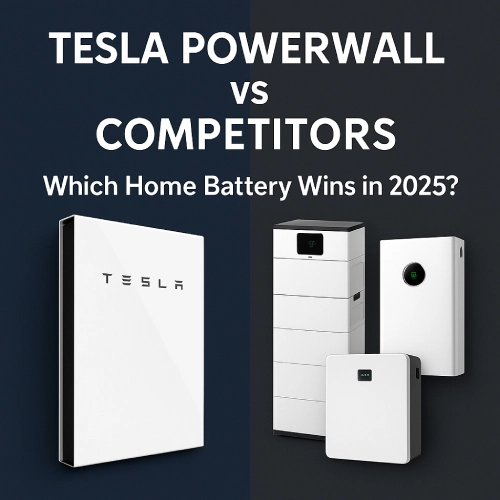
Home storage: from luxury to mainstream
Home batteries used to be expensive and niche. But prices dropped more than 50% in five years thanks to EV supply chains and LFP scaling.
A typical 10–15 kWh home system can:
- Store rooftop solar for nighttime use
- Provide backup during outages
- Shift consumption to cheaper hours
In some markets, customers can even sell energy back to the grid—turning homes into mini-power plants.
Vehicle-to-Home (V2H) and Vehicle-to-Grid (V2G)
The next energy revolution is already parked in your driveway. EVs hold far more power than a home battery—often 50–100 kWh.
With bidirectional charging:
- V2H lets an EV power the home during outages
- V2G earns money by supporting the grid
Japan leads with Nissan Leaf pilots, and Ford’s F-150 Lightning made backup power mainstream. BYD and Tesla are rolling out bidirectional support in the next wave.
Why storage reduces energy bills
Battery systems don’t just store energy—they store value.
- Time-of-use arbitrage: charge cheap, use expensive
- Peak shaving: reduce demand charges for businesses
- Backup power: avoid costly downtime
As grids adopt more renewables, storage becomes the economic engine enabling cleaner power at lower cost.
What’s next?
The world adds more solar and wind capacity every year—but without enough storage, fossil energy still fills the gaps. To fully break that dependency, global battery storage must scale dramatically.
By 2030, the International Energy Agency expects a 15× increase in grid-scale storage deployment. Most of that growth will come from LFP and sodium-ion, with EV batteries feeding into the system after retirement.
Energy storage isn’t an accessory to the clean energy transition—it is the transition.