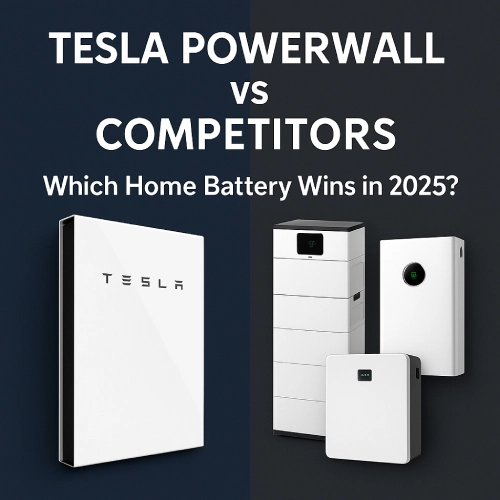
Home battery storage has evolved fast, and in 2025 the competition is fiercer than ever. For years, the Tesla Powerwall held the spotlight as the best option for homeowners wanting backup power and better use of rooftop solar. But now, brands like LG, BYD, Enphase, Pylontech, and even local energy tech providers have stepped up their game. Prices are falling, capacity is rising, and software is smarter than ever.
So, the big question is: in 2025, does Tesla Powerwall still win — or are competitors finally offering better value? Let’s break it down.
⚡ Tesla Powerwall: The Benchmark for Home Batteries
The Tesla Powerwall 3 continues to be a top contender thanks to its combination of storage, performance, and strong software ecosystem. Key strengths include:
- 11–13.5 kWh storage depending on model & region
- High power output — enough for whole-home backup
- Integrated solar + EV charger compatibility
- Real-time energy control via Tesla app
- Scalable expansion for future energy needs
Its biggest advantage? The Tesla ecosystem. Seamless automation means smarter solar usage, optimized charging cycles, and an effortless user experience — all in one app.
🔥 Competitors Catching Up: Who Are They?
Several strong brands now offer batteries with similar — or even better — features, often at a lower price point. The most notable Powerwall rivals in 2025 include:
- LG RESU Prime — high-efficiency reliability
- Enphase IQ Battery — modular microinverter design
- BYD Battery Box — great pricing + strong build
- Pylontech — cost-effective lithium storage
- SolarEdge Energy Bank — strong inverter integration
Each has strengths that appeal to specific homeowner needs — but none are a perfect universal winner.
📊 Performance Breakdown: Powerwall vs the World
| Feature | Tesla Powerwall | Common Competitors |
|---|---|---|
| Storage Capacity | 11–13.5 kWh | 10–16 kWh |
| Max Output | High (whole home capable) | Varies, often lower without expansion |
| Software Ecosystem | Excellent (Tesla app + automation) | Good but fragmented |
| Compatibility | Best with Tesla ecosystem | More flexible with multi-brand setups |
| Price | Premium tier | Often cheaper |
| Warranty | 10 years | 10–15 years depending on brand |
When it comes to raw performance and smart automation, Powerwall still has the edge — but if your priority is pricing for a modular setup, competitors can be more appealing.
🌞 Solar + Battery Efficiency
Powerwall pairs extremely well with rooftop solar, allowing homeowners to use nearly all the clean energy they generate. Competitors like Enphase also shine here thanks to their microinverter architecture — excellent for complex roof layouts.
If maximizing solar self-consumption is the goal, both Tesla and top rivals deliver meaningful results. The difference is usually the overall system design and installer experience.
💰 The Price Factor: The Real Game Changer
Here’s where Powerwall often loses ground. Premium brand = premium price. Competitors like BYD or Pylontech offer similar (if not better) battery capacity for significantly less investment.
In many regions, competitive brands are selling at 10–25% cheaper while still offering solid performance + warranties.
🧠 Software & Smart Energy Control
Tesla remains the most advanced in automation and energy learning. The Powerwall predicts usage patterns, power outages, and tariff changes — switching automatically to maximize savings.
Competitors are improving fast but still tend to rely on third-party apps or less intuitive interfaces.
🏆 So Which Home Battery Wins in 2025?
It depends on your goal:
- Want the smartest, easiest, futuristic experience?
➡ Tesla Powerwall still wins. - Want best price-to-performance ratio?
➡ BYD Battery Box & Pylontech are top choices. - Want modular expansion and flexible installations?
➡ Enphase IQ Battery takes the lead. - Need premium performance + brand trust?
➡ LG RESU Prime stands strong.
No single battery dominates all categories. The “best” home battery is the one that fits:
- Your solar capacity
- Your budget
- Your energy demand
- Your long-term independence goals
Conclusion: A Future Powered by Smart Storage
Home batteries are shifting from luxury upgrades to smart energy essentials. Tesla Powerwall still sets the standard in 2025 — but its competitors are closing in fast with more affordable and scalable choices.
One thing is clear: whether you choose Tesla or another strong brand, the future of home energy is cleaner, smarter, and more reliable. And it starts with the battery powering your home.


